
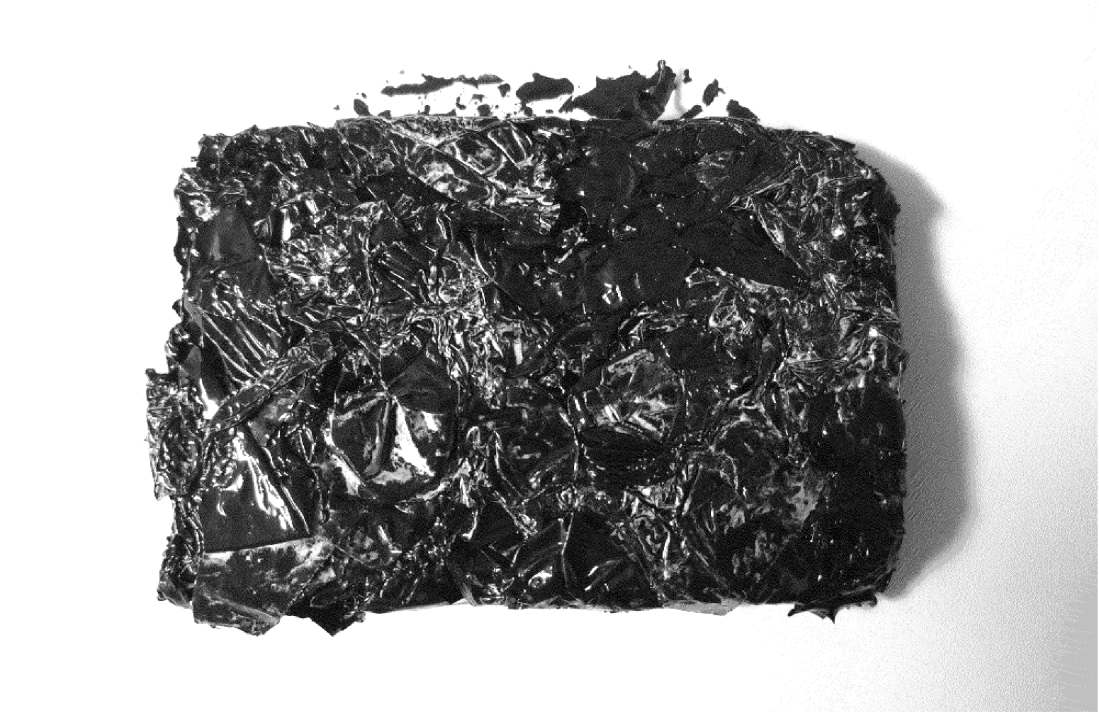
Insulating material that doubles as a physical source for NFC/RFID applications. Pictured: a mix of ferrous oxide, oil, and loose plastic waste.
Electrorheological fluid is most commonly used in braking systems; as particles in the fluid receive an electric charge, the fluid becomes gel. Combined with an aggregate like plastic makes a basic construction material, but it requires a constant stream of energy. Unsuitable for structural uses, but as an insulator, solid plastic is unparalleled.
Because the initial goal was to reuse waste plastic in a method that doesn’t chemically degrade it, the electric current running through the plastic would have to be low; nobody wants their roof leaking melted plastic. However, this better ensures a constant flow of power, and thus can come from homegrown, small scale energy sources (ie solar, geothermal, wind, etc).
Since ERF creates an electric field, this opens it up to wireless charging and NFC applications. Whether it can successfully access the “internet of things” ecosystem is up to the heat resistance of plastic.
Can this be effectively implemented in existing homes? What is the scale of power requirements to ERF-aggregate combinations? ERF Adobe is ready to patent, but these questions must be answered for a complete understanding of the technology.

 FancyMetalBox